Women's Responses to Genital Stimulation: Evidence for the Functional Role of Timing

Presented at INABIS '98 - 5th Internet World Congress on Biomedical Sciences at McMaster University, Canada, Dec 7-16th. Invited Symposium.
*Please click here for more on pheromones and books from Athena Institute *Review similar topics, click titles: Love Cycles, and Sexual Response in Women
By Winnifred B. Cutler (Athena Institute for Women's Wellness Research, Chester Springs, PA, USA)
Abstract:
At first coitus 1% of young women but 98% of young men achieve orgasm. By age 40, 98% of women report orgasm at genital stimulation. Whether it is simply the young man's ignorance as he moves to the rhythm of his own feedback stimulus and only slowly learns to consider his partner's rhythmic potentials; and/or the female genital apparatus is more complex remains unknown.
Evidence suggests she may have 3 separate potential locations for ever more complex orgasmic experiences. Genital stimulation in the presence of a man more than once in the nonmenstruating week associates with the steroid secretion patterns of fertility. Weekly genital stimulation can reduce the potential for atherosclerosis, provide the physiologic substrate for building bone mass during the 30s, prevent osteoporosis thereafter, and delay aging. Sporadic activity has the opposite effect.
Abstention during the time of menstrual flow reduces the risk of endometriosis and dysfunctional uterine bleeding. These pathologies increase the risk of hysterectomy which may reduce women's sensory responses to genital stimulation.
For heterosexual women, the sensory responses to genital stimulation are dependent on the skill of her male partner and his understanding of female physiology. The functional responses may be more dependent upon his pheromones.
Introduction:
Timing has a functional role in women's responses to genital stimulation. Recognizing a time to embrace and a time to refrain from embracing can promote the health and wellbeing of the reproductive endocrine system of individual women.
This paper evaluates the peer-reviewed published literature to offer a cohesive view of the functional role played by the timing of genital stimulation in the health and well being of women. Correlatively, the literature also reveals the disruptive relationship between inappropriate timing of genital stimulation and deficient reproductive endocrine health.
A Time to Learn
A time to learn the ways in which genital stimulation can lead to orgasmic completion appears to be dependent on the complexity of the physiological system. At first coitus < 2% of young women achieve orgasm while > 98% of young men do. [1] The literature does not yet clarify if this is simply because the young man moves to the rhythm of his own feedback stimulus and only slowly learns to consider his partner's rhythmic potentials. Data of healthy, nonstudent, female populations have revealed the extremely high orgasmic achievement rate from clitoral stimulation.[2]
Vaginal stimulation is similar. Alzate has shown the orgasmic inevitability women experience under appropriately timed digital manipulation of their individually specific, and somewhat idiosyncratic vaginal site of maximal sensitivity.[3] However, a study of Philadelphia-area women suggests that women do not experience consistently, sufficient genital stimulation during coitus to trigger orgasmic inevitability. The genital apparatus of women appears to be more complex than that of men. Evidence suggests that women may have 3 separate potential locations for ever more complex orgasmic experiences. [4,2,1]
A Time to Behave
At least once in every nonmenstruating week appears to be a minimum time to engage in genital stimulation with a partner in order to reliably yield steroid secretion patterns that promote both fertility and general health.
From 1975 through 1986, in a series of studies at the University of Pennsylvania, my colleagues and I investigated relationships between the timing of women's sexual behavior and aspects of their reproductive endocrinology. At Stanford University with different colleagues, I investigated similar relationships among perimenopausal women.
Each of the studies demonstrated health benefits from intimate connections with another person, provided the timing was appropriate. Regular exposure to either sexual intercourse or genital stimulation in the presence of a man (but not masturbation) was associated with fertile-type menstrual cycles. Orgasm was not relevant; the presence of a partner was. Compared to sporadically active or abstaining women, the length of the cycle for WEEKLY women was less aberrant in length - rarely exceeding the span of 29.5 + 3 days in length.[5,6] SPORADIC and CELIBATE patterns showed a significantly higher incidence of aberrantly long and short menstrual cycle lengths.[7,8]
In 1991, this research was replicated by investigators in Arizona and New Mexico who confirmed these findings.[9] Aberrant length menstrual cycles are more likely to be anovulatory or have luteal phase deficiencies and be subfertile.
While some subfertile cycles are anovulatory, more often ovulation does occur followed by a "short luteal phase". Both of these abnormalities result in insufficient progesterone secretion for implantation of a conceptus. These hormonal changes lead to deficiencies in bone metabolism and beta endorphin secretion, while increasing the incidence of atherosclerotic uterine arteries.[10] Luteal phase estrogen levels were shown to be twice as high in WEEKLY women as in SPORADIC or CELIBATE women.[11] Perimenopausal women who engaged in a regular, weekly sexual relationship entered menopause later than less sexually active women.[12] In contrast, women with sporadic sexual behavior patterns - both in their younger reproductive, and later perimenopausal years - showed half the level of estrogen as those with regular weekly patterns.[12,13]
Furthermore, half of the sporadically active young women had lower estrogen levels than are characteristic of women after menopause.[11] Age at first coitus is associated with subsequent fertility. A critical period for initiation of sexual contact - within 7 years of menarche - may enhance the likelihood of subsequent fertility.[14] Those who had first coitus more than 7 years after menarche were significantly more likely to be infertile in their thirties.[14]
Accumulated evidence now suggests that weekly genital stimulation in the presence of a man can: delay aging, reduce the potential for atherosclerosis, provide the physiologic substrate for building bone mass during the 30s and prevention of osteoporosis thereafter, and enhance other physiologic systems dependent on the steroid patterns of a weekly active sexual life.[10] Sporadic and abstinent patterns of genital stimulation during the fertile years appear to disrupt the endocrine rhythm in 50% of cases.
A Time to Refrain from Sexual Behavior
A time to refrain from genital stimulation also appears to promote a woman's health and well being. Genital stimulation during the time of menstrual flow may be ill-advised. Evidence suggests an increased risk of endometriosis in young women [15] and an increased dysfunctional pattern of bleeding in post 40-year-old women.[16]
Uterine contractions during orgasm are likely the responsible agent in both pathologies.[1] In relation to cases of endometriosis misplaced endometrial tissue found on the surface of the uterus and ovaries may have been forced there by orgasmic/uterine contractions.[1] In the US 50% of women are "prescribed" hysterectomy; a large proportion due to endometriosis in younger and "dysfunctional uterine bleeding" in older sexually active women.[17] Unfortunately this "cure" for what may be sexually exacerbated uterine conditions, appears to diminish women's responses to sexual stimulation.
Most hysterectomy procedures alter the vaginal architecture and remove the cervix.[17] Both changes may diminish positive penile sensations as well as the woman's source of sensory stimulation and effector neurons. Hence, a time to refrain may lead to a more satisfactory sex life for both men and women.
Conclusions
A time for changing the pattern of stimulation is worthy of study given life changes in sex hormones, blood flow, and neural processes. Many questions remain. Do age-related changes affect women's responses to genital stimulation? Do hormonal replacement regimens vary in their capacity to ameliorate such changes? For heterosexual women, the sensory responses to genital stimulation are dependent on the skill of her male partner and his understanding of female physiology.
Since orgasm was not relevant to the estrogen changes or the fertility relationships in the cited studies, a man's pheromones rather than his sensual skills most likely account for some substantial stimulatory component in achieving these relationships. However, adequate sensory stimulation may increase the likelihood that a woman will be willing to engage in regular genital stimulation in the presence of a man. Thus, appropriate timing accounts for many positive outcomes.
References for Women's Responses To Genital Stimulation:Evidence For The Functional Role Of Timing
1. Cutler WB. Love Cycles: The Science of Intimacy First edition, Villard/Random House, New York. 1991. Second edition Athena Institute Press, 1996.
2. Cutler WB, McCoy NL Friedmann E, Genovese-Stone E, (1998) Sexual response in healthy women. in preparation
3. Alzate H Vaginal eroticism: a replication study. Arch sex behav 14, 6:529-537.
4. Komisaruk BR, Gerdes C, Whipple B (1997) Complete spinal cord injury does not block perceptual responses to genital self stimulation in women. Archives of Neurology 54:1513-1520.
5. Cutler WB, Garcia CR, Krieger AM. Sexual behavior frequency and menstrual cycle length in mature premenopausal women. Psychoneuroendocrinology. 1979;4:297-309.
6. Cutler WB, Preti G, Huggins G, Erickson B, Garcia CR. Sexual Behavior Frequency and Fertile-type Menstrual Cycle. Physiology and Behavior. 1985;34:805-810.
7. Cutler WB, Garcia CR, Krieger AM. Luteal Phase Defects: A Possible Relationship Between Short Hyperthermic Phase and Sporadic Sexual Behavior and Menstrual Cycle Length in Women. Hormones and Behavior. 1979;13:214-218.
8. Cutler WB, Garcia CR, Krieger AM. Sporadic sexual behavior and menstrual cycle length in women. Hormones and Behavior. 1980;14:163-172.
9. Burleson M, Gregory WL, Trevathan W. Heterosexual activity and cycle length variability: effect of gynecological maturity. Physiology & Behavior. 1991;50:863-866.
10. Cutler WB & Genovese-Stone E Wellness in women after 40: the role of sex hormones and pheromones. Disease a Month 42:9:423-546.
11. Cutler WB, Garcia CR, Huggins GR, Preti G. Sexual Behavior and Steroid Levels Among Gynecologically Mature Premenopausal Women. Fertil Steril. 1986;45(4):496-502.
12. McCoy N, Cutler W, Davidson JM. Relationships Among Sexual Behavior, Hot Flashes, and Hormone Levels in Perimenopausal Women. Arch Sexual Behavior. 1985;14(5):385-394.
13. Cutler WB, Davidson JM, McCoy N. Sexual Behavior, Steroids and Hot Flashes are Associated During the Perimenopause. Neuroendo. 1983;5(3):185.
14. Cutler WB, Garcia CR, Krieger AM. Infertility and Age at First Coitus: A Possible Association. J. Biosoc Sci. 1979;11:425-432.
15. Filer RB, Wu CH. Coitus during menses: its effect on endometriosis and pelvic inflammatory disease. Reprod Med 1989;34(11)887-90.
16. Cutler WB, Friedmann E, McCoy NL (1996) Coitus and menstruation in perimnopausal women. J Psychosom Obstet Gynecol 17:149-157.
17. Cutler WB. Hysterectomy: Before and After, HarperCollins NY, 1990.
Presentation Number SAcutler0550
Click here to view the original INABIS '98 symposium
" My research has consistently focused on what behavior a woman can engage in to increase her power, well-being, and vitality."
---Winnifred B. Cutler, Ph.D.
Dr. Cutler's pheromone science has been "bottled" into vials of unscented fragrance additives that increase wearers' sexual attractiveness. AVAILABLE FOR PURCHASE HERE
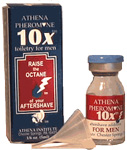
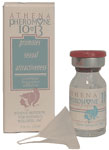
A portion of the profits from our book and pheromone sales helps to fund Athena's on-going research.