About Athena Athena Mission Athena Services
Winnifred Cutler, Ph.D. Founded Athena Institute in 1986

Dr. Winnifred Cutler, B.S. in Psychology cum laude from Ursinus College in 1973, earned her Ph.D. in Biology from the University of Pennsylvania in 1979 followed by postdoctoral work in behavioral endocrinology at Stanford University. In 1985 she co-founded the Women's Wellness Program at the Hospital of the University of Pennsylvania. She has published over 50 scientific papers, is co-inventor on 5 patents and author of eight books on women's health translated into 7 languages - including the 2025 (4th) edition of Love Cycles: The Science of Intimacy chronicling both her discovery of Human Pheromones and development of successful formulas as well as her book, Hormones and Your Health: The Smart Woman's Guide to Hormonal and Alternative Therapies for Menopause with essential information for women over age 35 to achieve their 'personal-best' health.
Dr. Cutler's post-doctoral fellowship at Stanford University: founding the Stanford Menopause Study
During the years as a graduate student, Dr. Cutler presented her studies of how lunar cycles influence menstrual cycles and how sexual behavior frequency and timing could be shown to increase or decrease fertility. Dr. Julian Davidson, Professor of Physiology at Stanford had been actively leading a team of researchers studying similar issues in small mammals and invited her to do postdoctoral research in his lab in order to test what happened as men and women aged to the patterns already shown in younger women. The new technique of testing blood for hormone levels had just been established and his lab was using this radioimmunoassay method. Together they wrote a grant application that was funded to launch the Stanford Menopause Study.
This was the first study in the United States to investigate the perimenopausal changes in estrogen and testosterone and how these hormonal levels and their changes might relate to changing patterns of sexual behavior widely recognized in aging persons but not yet formally studied. Eventually, Norma McCoy a Professor at San Francisco State University joined their investigation.
Several hundred California women enrolled in the study once it was announced that an investigation was underway to evaluate the changing patterns of sexual life in intact (no pelvic surgery) women from their 40's on. Two seminal findings emerged.
Cutler WB, Davidson JM, McCoy N., Sexual Behavior, Steroids and Hot Flashes are Associated During the Perimenopause. Neuroendo. L 5(3): 185, 1983.
McCoy N, Cutler W, Davidson JM. Relationships Among Sexual Behavior, Hot Flashes, and Hormone Levels in Perimenopausal Women. Arch Sexual Behavior 14(5) 385-394, 1985.
In addition, so many women who were not intact, asked to be studied that Dr. Cutler began evaluating what they were saying. She learned that these hysterectomized women seemed to be suffering a host of sexual deficits that their physicians did not know how to help as no science had yet been conducted. That realization generated a 35-year pursuit, which Dr. Cutler began to investigate the impact of sexual behavior, the suggestion by clinicians that they undergo surgery, and the choices women make about hormones and other health practices.
Dr. Cutler comments on her experience as a graduate student with Celso-Ramon Garcia, M.D.
My former mentor, Celso-Ramon Garcia, MD, died Feb. 1, 2004 at the age 82. His many obituaries chronicle his important role early in his career clinically investigating the first oral contraceptive, “The Pill”. Dr. Garcia was an incisive intellect and a peerless surgeon who trained many outstanding gynecologic surgeons. His impact on women's reproductive health was historic. His impact on my path as a scientist was profound. We were coauthors on many research papers and 3 books. In one of them, Menopause: A Guide for Women and the Men Who Love Them, the preface states:
December 1985, Dr. Cutler and Dr. Garcia co-founded the Women's Wellness Program at the Hospital of the University of Pennsylvania
HUPDATE, the newsletter of the Hospital of the University of Pennsylvania, p.11 stated:
“FOCUS ON PREVENTION AND WELLNESS-WOMEN'S WELLNESS PROGRAM OPENS"
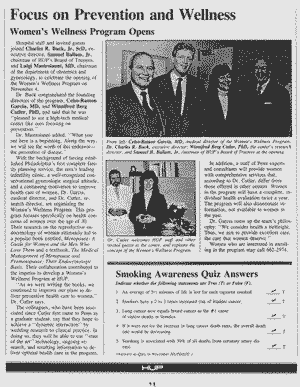
Hospital staff and invited guests [celebrated] the opening of the Women's Wellness Program on November 4.
Dr. Charles Buck [Executive Director of HUP's Board of Trustees] congratulated the founding directors of the program, Celso-Ramon Garcia, MD and Winnifred Berg Cutler, PhD. ***
Click Here to Enlarge Photo
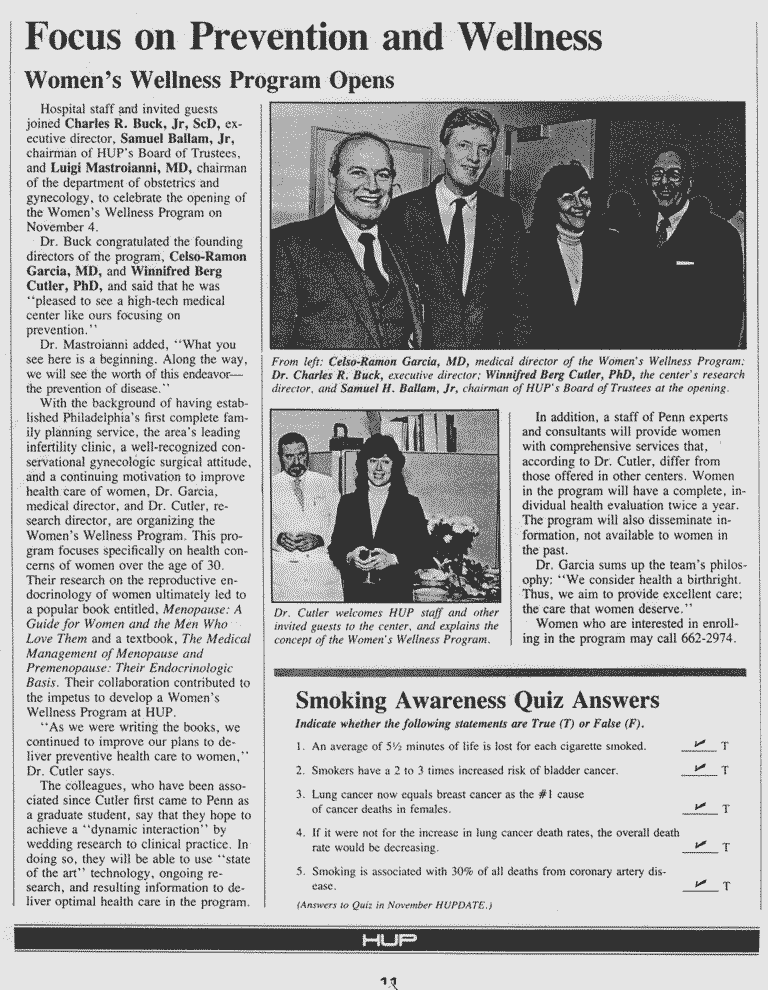
With the background of having established Philadelphia's first complete family planning service, the area's leading infertility clinic, a well-recognized conservational gynecologic surgical attitude, and a continuing motivation to improve health care of women, Dr. Garcia, medical director, and Dr. Cutler, research director, are organizing the Women's Wellness Program. This program focuses specifically on health concerns of women over the age of 30.***
The colleagues, who have been associated since Cutler first came to Penn as a graduate student, say that they hope to achieve a “dynamic interaction” by wedding research to clinical practice. ***
In addition, a staff of Penn experts and consultants will provide women with comprehensive services that, according to Dr. Cutler, differ from those offered in other centers. Women in the program will have a complete, individual health evaluation twice a year. Dr. Garcia sums up the team's philosophy: “We consider health a birthright. Thus, we aim to provide excellent care; the care that women deserve.”
Groundbreaking Research on Women's Health with her colleague and friend, the late Elizabeth Genovese, M.D.
Dr. Elizabeth Genovese, with Dr. Cutler, conceptualized a program for overall health, a 'prescription for wellness' to include; a 2 hour physical evaluation, health maintenance overview, and methods of incorporating nutritional and exercise habits to ensure well-being.
Dr. Genovese, received her bachelor's degree Phi Beta Kappa from Harvard University, M.D. and MBA degrees from the University of Pennsylvania and was board certified in Internal Medicine.
 " Her intellectual output was dazzling and she was an extraordinary colleague. Elizabeth was an astonishing force, a contributor to our work on women's wellness, a scholar, a physician, and a loving mother to her children. I do miss her."
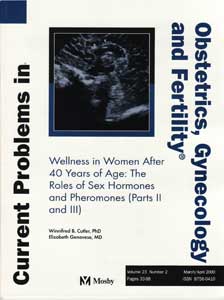
Dr. Genovese co-authored many scientific papers with Dr. Cutler on kyphosis, stress urinary incontinence and sexuality. They wrote, Wellness in Women After 40: The Role of Sex Hormones and Pheromones in 2000., for Current Problems in OB/GYN, Mosby, Inc. (120pp, 250 refs).
Research in the 1980's and the Pheromone Discovery
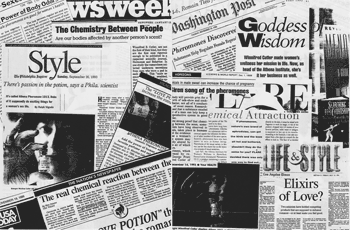
 The Washington Post , 11/18/86.Pheromones Discovered in Humans (Page One)
"Scientists in Philadelphia have established for the first time that the human body produces pheromones."
Also in 1986, her co-discovery of human pheromones received major news coverage in Time (12/1/86), Newsweek (1/12/87) and a front page story in the Washington Post newspaper, (11/18/86) because it established the first scientific proof that human pheromones affect the relationship between men and women.
"It's remarkable. A very clear pattern has been emerging and it confirms that a woman's optimal reproductive health is a part of a finely tuned system and that a man, on a regular and sustained basis, is an essential part of it," said Cutler, who has led the research effort.
"It wasn't clear until our most recent studies how important male essence really is," she said, "but now that we know this, it helps to explain our earlier findings. You might say that exposure to pheromones is the essence of sex."
Pheromone Discovery -- Media Highlights
 Newsweek, 1/12/87
The Chemistry Between People: Are Our Bodies Affected by Another Person’s Scent?
Now two new studies are stirring up the pheromone debate with the boldest claims yet. Researchers at the University of Pennsylvania and the Monell Chemical Senses Center, a nonprofit research institute in Philadelphia, say that people produce underarm pheromones that can influence menstrual cycles.
The studies, done by chemist George Preti and biologist Winnifred B. Cutler, are not the first of their kind, but they are the first ones rigorous enough to be published in a respected scientific journal, Hormones and Behavior.
Cutler's conclusion: " Male essence" contains at least one pheromone that "helps promote reproductive health". for more details click here

Time Magazine, 12/1/86
Studies find that male pheromones are good for women's health
Last week Philadelphia researchers weighed in with two reports showing that scents, including underarm odors, do indeed affect menstrual cycles. The reports came with a kicker: male scents play a role in maintaining the health of women, particularly the health of the female reproductive system. Researchers at the Monell Chemical Senses Center and the University of Pennsylvania School of Medicine have found that women who have sex with men at least once a week are more likely to have normal menstrual cycles, fewer infertility problems and a milder menopause than celibate women and women who have sex rarely or sporadically.
So the researchers were hardly tentative about the meaning of it all. "What we're saying here is that men are really important for women," said Winnifred Cutler, a biologist and specialist in behavioral endocrinology who conducted the study along with Organic Chemist George Preti. "If you look at all the data, the conclusion is compelling. A man or his essence seems essential for an optimally fertile system."
 USA Today, 11/19/86
The Real Chemical Reaction Between the Sexes
Chemicals in men's bodies can cause their female sex partners to be more fertile, have more regular menstrual cycles and milder menopause, landmark research shows. And women who have sex with men at least once a week benefit most from the chemicals, which apparently work through the sense of smell.
"The exciting part is the effect we have on each other. Men are important to women," says Dr. Winnifred B. Cutler of Philadelphia, whose studies show for the first time that chemicals called pheromones exist in humans. Pheromones have long been known to exist in animals, as scents that attract sex partners. Cutler's new studies...show women are affected by pheromones from men and women: for more details click here
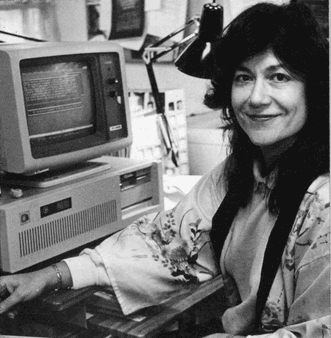
While at UPenn and then Stanford University...
A third study Dr. Cutler completed while in graduate school was the first to bear out the conventional wisdom that fertile women's menstrual cycles are tied to the phases of the moon... all three studies were published. She went on to start the Stanford Menopause Study with Julian Davidson, where she found that regular heterosexual activity increased estrogen levels and reduced or eliminated hot flashes in menopausal women, and delayed the onset of menopause for women in their 40's.
Dr. Cutler became a proponent of hormone replacement therapy as a result of her work at Stanford. Her studies of the biomedical research, primarily from Europe, suggested that hormone replacement therapy could prevent or halt osteoporosis, most cardiovascular disease to which women are subject to after menopause, hot flashes and other symptoms of 'the change'.
Athena Pheromone Products:
Developed, Tested, and Launched
(please click on bold type for details)
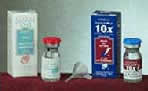 In 1993 Dr. Cutler formulated, tested and marketed a pheromone cosmetic fragrance additive for women, Athena Pheromone 10:13tm and in 1995, an aftershave additive for men, Athena Pheromone 10Xtm.
A Message from Dr. Cutler,
" Athena Pheromone 10:13™ is the cosmetic fragrance additive for women I developed to enhance your sexual attractiveness to men. Based on my pheromone research that began in 1981, I have managed the synthesis of human pheromones into a cosmetic to be added to your favorite fragrance. Pheromones are airborne "messenger substances" that your body emits, triggering responses from men.
Athena Pheromone 10:13™ can enhance the "sexual attractiveness" of women who combine it with a favorite perfume or cologne as directed. Although 10:13 may not work for every woman, used as directed, it should work for most. Science's "gold standard" test of whether a product works is called a double-blind, placebo-controlled study. Athena Pheromone 10:13™ has two published 8 week studies (2002 study click here, 2004 study click here) demonstrating its effectiveness in increasing a women's sexual attractiveness to men.
And Athena Pheromone 10X™ for men has an 8 week double blind published study proving increased attractiveness to women. I am unaware of any cosmetic that boasts of ONE such double blind, placebo controlled 8 week study proving effectiveness published in a scientific peer reviewed journal. Athena Pheromones have THREE such gold standard published studies."
Dr. Cutler's Pheromone 'Love Potion' Attracts the Media
Media Highlights Since 1993...
In 1993, after the launch of her women's pheromone cosmetic,, Dr. Winnifred Cutler Appears on National TV Talk Show, "Montel Williams" discussing Athena Pheromone 10:13tm for Women. See video excerpt...
Montel: Wait a minute. I am not doing an infomercial for this, I mean it. These ladies tried this on in an experiment…and you’re saying it really works.
Susie: It worked. They’d follow you around. In my office, I’ve been working there for years and all of a sudden the guys are paying attention to me (click here for more)
Over the years, Dr. Cutler's pheromone research and Athena Pheromone products have been featured in major media venues on television and online, in magazines, and newspapers:
click titles for more details
- Hayhouse Radio, October 17, 2018 "Love is in the Air" Dr. Cutler's interview with best-selling author Dr. Christiane Northrup
- New York Times September 6, 2015. "A Nose for Lust: Conducting a Field Test on Pheromones " By Henry Alford
- Fusion.net: May 26, 2015. "I wore 'pheromone perfume' for a week to turn myself into a sex goddess" By Taryn Hillin
- Byrdie.com: February 24, 2015. "I Tried a Pheromone Potion and Didn't Tell My Boyfriend" By Faith Xu
- Intothegloss.com: October, 2014. "A Pheromone Spray Test Drive" By Trace Barnhill
- Allure Magazine (2008) "Animal Attraction" by By Judith Newman
-
Ciudad Magazine; August 2007. LA Magazine for the latino community features Athena Pheromone 10:13 for women and Dr. Cutler's research.
- ABC 20/20 news program 2005"Are Pheromones a Secret Weapon for Dating?"
- The New York Times (2004, 2009) "Sex Without Estrogen: Remedies for the Midlife Mind And Body"
- WebMD.com 2002 "Got Pheromones? Get Affection"
- Fox News Denver 2001 "FAME OR SHAME? 'Twins Test' of Athena Pheromones"
- ABC Primetime News 1998 "Sniffing out a Mate: Signals in Our Sweat"
- GQ Mens Magazine 1997 "Personal Best: A Guide to Health"
- Medical Tribune 199510X study "Pheromone Cologne Increases Sexual Activity"
As a research author; Dr. Cutler's books on women's health
(please click on book titles for more details)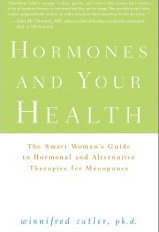 In 2009, after six years of research and writing, Dr. Cutler's most recent book on the hormonal health of women over 35 was published. "Hormones and Your Health: The Smart Woman's Guide to Hormonal and Alternative Therapies for Menopause" (John Wiley & Sons, Inc.) presents state of the art research, exciting medical breakthroughs, and current information on topics such as nutrition, hormone replacement therapy, bone and womb preservation, breast cancer and mammography, and overall health for women and their physicians to help as an essential guide to better health practices... "Fearing malpractice attorneys, your doctor may practice 'defensive medicine' by ordering redundant, expensive tests...You need to take charge of your own health and well being; consult with the best medical people you can find and decide which recommendations to accept, (identify) the economic interests behind the recommendations.
"Winnifred Cutler's message is clear, precise and correct that women have choices as far as hormone therapy is concerned and they are in charge. "
Alan De Cherney, M.D. Editor in Chief, Fertility and Sterility and branch chief at NIH research
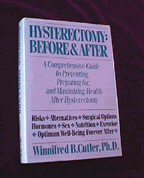
In Menopause: A Guide for Women and Those Who Love Them (Norton) ... and in Hysterectomy: Before and After (HarperCollins), she helps women experiencing fundamental hormonal and physiological changes take charge of their well-being.
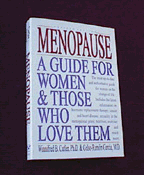
With her mentor, the late Celso Ramon-Garcia, M.D., Dr. Cutler wrote the medical textbook, The Medical Management of Menopause and Premenopause: Their Endocrinologic Basis in 1984, which received very positive journal reviews.
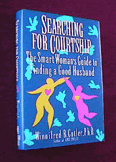
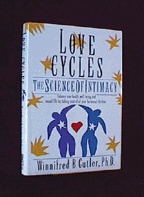
In, Love Cycles: The Science of Intimacy (Villard/Random House), she chronicles her discovery of human pheromones, and helps readers enjoy greater intimacy. In Searching for Courtship: The Smart Woman’s Guide to Finding a Good Husband (Villard/Random House), she teaches women how to enjoy the process of finding a good husband starting from the biological basics.
Scientific Presentations, Publications, and Awards Over the Years
(please click on titles/bold print for more details)
- Dr. Cutler published her papers marking the discovery of lunar and menstrual phase locking in 1980 in the American Journal of Obstetrics and Gynecology, and 1987 (with colleagues) in the journal, Human Biology,
- In 1992, Dr. Cutler was named U.S. Business Owner of the Year by the National Association of Women Business Owners.
- In 1996, Cheltenham High School (PA) elected her to its Alumni Hall of Fame for her personal and professional achievements.
- Upon invitation in May 1999, Dr. Cutler gave a seminar, Pheromones as Sex Attractants, to the American College of Obstetricians and Gynecologists for CME Credits
- With Dr. Elizabeth Genovese, she wrote a monograph titled Wellness in Women After 40: The Role of Sex Hormones and Pheromones (Mosby Inc, 2000, 120pp, 250 refs.)
- In 2001, Ursinus College presented Dr. Cutler its Alumni Award for outstanding professional achievement and service to the college.
- In June 2002, Dr. Cutler's invited article on pheromones and sexual attractiveness was published by Climacteric, the peer reviewed journal of the International Menopause Society.
-
In April 2002, at the Annual Meeting of the Society for Behavioral Medicine Dr. Cutler presented her poster on "Human Sex-Attractant Pheromones: Efficacy Studies..." and at the same meeting Dr. Joan Freibely of Harvard University presented a poster of the study led by Susan Rako, M.D. Journal of Sex Research (Pheromonal Influences on Sociosexual Behavior in Postmenopausal Women. Rako, Freibely 2004).
- In May 2004, the Annual meeting of the American Psychiatric Association in New York, Dr. Cutler presented her seminar, How Sexual Attractiveness, Pheromones, Fertility and Hysterectomy are Related.
- in October 16-19 2005, Dr. Cutler presented her poster to the American Society for Reproductive Medicine "Evidence that Sex Attractant Pheromone Effects Strengthen with continued use."
- In 2009, October, Dr. Cutler’s oral presentation was accepted for the 65th annual meeting of the American Society of Reproductive Medicine (ASRM), titled Breast Cancer in Postmenopausal Women: What is the Real Risk?
- In 2010, the International Menopause Society invited Dr. Cutler with Dr. Regula Burki, commentary on HRT was published for the IMS membership newsletter and later in the journal Climacteric.
- In April 2011, Climacteric subsequently published their commentary - Overdiagnosis may further diminish mammographic breast cancer benefits minimized by elegant study by Drs. Cutler and Burki
- In November 2011, the online newsletter Menopause Live, Mortality reduction by widespread screening: not quite as effective as we all hope? with coauthors Drs. Burki and Kolter
- In April 2012, Dr. Cutler presented to the Society for Behavioral Medicine;
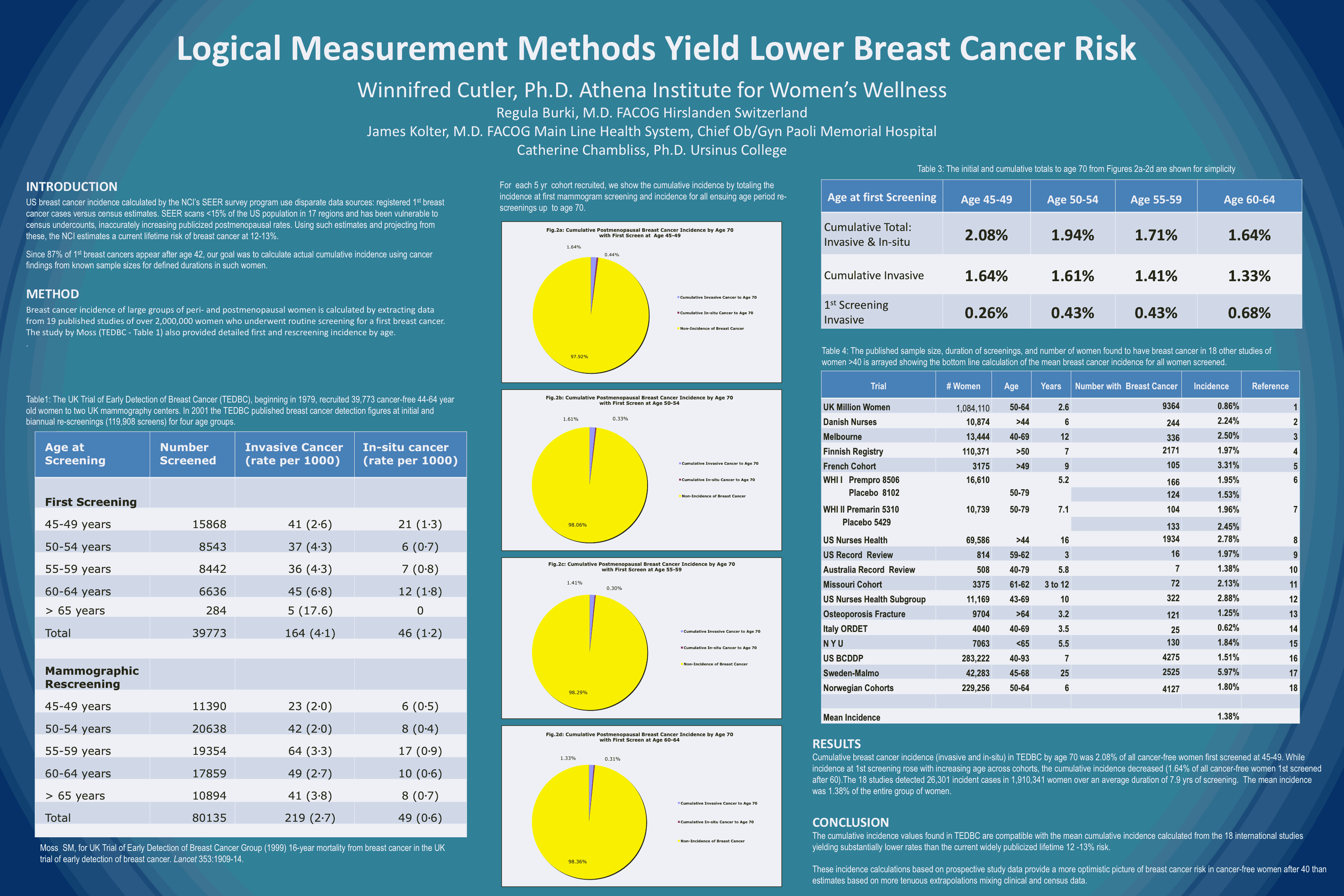
'Logical Measurement Methods Yield Lower Breast Cancer Risk' co-authors by Regula Burki, M.D., James Kolter, M.D., and Cathy Chambliss, Ph.D.
- In June 2013, Drs. Cutler, Burki, Kolter, and Chambliss paper "Mammograms for Symptomless Women - Not So Wise?", was published in the peer-reviewed journal Climacteric 'short review'. Also published in the International Menopause Society's newsletter, InFocus (January 2013).
- In June 2015, Athena's research group published a major study with new evidence that symptomless women should reject mammograms
- On April 21, 2018 Dr. Cutler’s alma mater Ursinus College presented her with the Alumni Award for Service to Humanity
- On September 10, 2020 The Public Library of Science published Dr. Cutler’s coauthored findings that 94% of pre and postmenopausal women with no prior diagnosis at enrollment remained cancer-free over 25 years: Long term absence of invasive breast cancer diagnosis in 2,402,672 pre and postmenopausal women: a systematic review and meta-analysis
Outreach and Mission of Athena Institute
- In April 2023, The Athena Institute Fund for Behavioral Immunology in Women’s Wellness was launched with the first award going to Dr. Robert M Kaplan, Stanford University Clinical Research Center. This substantial ressearch Grant is designed to find ways women can strengthen their immune systems through their own behavioral habits. Our goal is creating a positive scientific contribution to knowledge.
- In June 2000, Athena Institute awarded a research grant to Cindy Meston, Ph.D. of the University of Texas at Austin, published in Archives of Sexual Behavior (2004), 'The Effects of Hysterectomy on Sexual Arousal in Women With a History of Benign Uterine Fibroids.'
- In May 2006, additional grant funding from Athena Institute for the study of sexual deficits in post-hysterectomized women was awarded to Dr. Julia Heiman, Director of Kinsey Institute.
- In June 2015, Athena Institute and Dr. Cutler announced the updated hospice program (originally launched in 2007).The Athena Institute Pre-Med Hospice Volunteer Program has been continuously funded since 2007 as it expands with a grant from Athena Institute. The program aims to encourage area pre-med students to volunteer services to local hospice patients, with the continuing efforts of the, Revs. Dr. Graham Robinson and James Hodsden. Please read the most recent Reflection Essays.
- In the summer of 2014, in response to the exposure of sexual assault patterns on college campus U.S. wide, the institute's summer interns helped develop a Safe Dating Guide for College Women and Safe Dating Guide for Working Women
- The Athena Institute continues to offer paid internships to nearby college students in which they learn extensively from Dr. Cutler about the scientific method, office administration, communication skills, and small business operations management.
Dr. Cutler's Research Focus Over the Years includes:
Women's Health
- Hormone Replacement Therapy is very good for most women; the 'Right Regimen' of sequential bioidentical HRT
- There are effective treatments; to avoid Hysterectomy, cure Fibroids, and treat urinary incontinence and prolapse. "When in doubt, take it out" is NOT a good motto for women to accept.
Breast Cancer
- The true breast cancer incidence is very low; contrary to what most women are led to believe ("Beware of The Breast Terror Industry")
- Annual mammograms are probably bad for you; risks of radiation, erroneous readings, and overdiagnosis. But clinical breast exams are valuable in catching, in timely fashion, breast disease that should be treated.
- Dr. Cutler, with co-authors Drs. Burki, Kolter and Chambliss, published an article on Jan. 28, 2013 in the International Menopause Society's IN FOCUS website service, with these 3 "take home messages":
- Mortality reduction in breast cancer is a result of improved medical care, not from mammograms
- Routine mammograms produce overdiagnosis that may cause more harm than good for women.
- Women should question recommendations of routine mammogram screening since annual clinical exams (without mammography) can find disease early without overdiagnosis that leads to unneeded and potentially harmful treatments.
- By 2017 this work had expanded to the 7 health practices that women can choose to increase their freedom from a diagnosis of invasive breast cancer.
See summary Full Details
Essential Messages for Women and their Physicians: 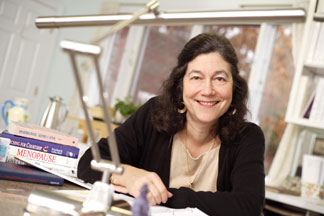
- Avoid Removal of Ovaries at Hysterectomy
Dr. Cutler's cover paper in Menopause Management attacks
the practice of routinely removing ovaries in hysterectomies over age 40. In Nov/Dec 1996 issue, titled Oophorectomy at Hysterectomy
after Age 40? A Practice That Does Not
Withstand Scrutiny. Her opening paragraph states:Before research papers began revealing many negative effects, the routine removal of healthy ovaries at hysterectomy was widely practiced in North America in the 70s and 80s. Today, research available through a simple Medline search leads me to seriously question the rationality and ethical propriety (in the post forty-year old woman) of routinly removing healthy ovaries during a hysterectomy in the 99% cases with less than 1% risk of developing ovarian cancer." Dr. Cutler points out that removing ovaries is 'castration'.
- Sexual Attractiveness over 40
The quality of life for postmenopausal women who are experiencing a decline in attractiveness related to aging... can be significantly enhanced. Drs. Cutler and Genovese, published in the journal Climacteric (2002), that 'Sex attractant pheromones may have the capacity to restore the subtle chemistry of this equation, much as hormonal replacement therapy helps to stem the tide of other menopausal declines.' And outlined the five theoretical factors of attraction:1) Physical appearance and grooming;
2) Social skills - flirting, bodily grace, confidence;
3) Sexual motivation and interest in romantic contact and lovemaking;
4) Sexual skills
5) Excretion of sex attractant pheromones.Menopause declines occur in the physical, the motivational, and the pheromonal components. Because topically applied pheromones increase hugging, petting and affectionate contact with men, they have the potential to improve the quality of life (romantic and overall well-being) for postmenopausal women.
Mammogram Screening May Do More Harm Than Good
Dr. Cutler, with co-authors Drs. Burki, Kolter and Chambliss, published an article on Jan. 28, 2013 in the International Menopause Society's IN FOCUS website service, with these 3 "take home messages":1) Mortality reduction in breast cancer is a result of improved medical care, not from mammograms
2) Routine mammograms produce overdiagnosis that may cause more harm than good for women
3) Women should question recommendations of routine mammogram screening since annual clinical exams (without mammography) can find disease early without overdiagnosis that leads to unneeded and potentially harmful treatments.
- Take Ownership of your Health (From Chapter 1, Hormones and Your Health)
You are in charge of your health. No one else should do it for you. No one else can feel what you feel when your energy is soaring, your sense of joy is boundless, your bones and muscles are vibrant as you stand erect and move gracefully through your days, and your immune system is strong...
Don't accept less than what is best for you. If a doctor keeps you sitting in the waiting room for an hour past your appointment, without explanation or apology, that treatment is disrespectful. Find a doctor who respects you.
- "NATURE'S DESIGN" For Women: A Good Model for HRT
Fertile women (who rarely experience cardiovascular disease) have a normal estrogen-progesterone cycle, in which progesterone is absent the first half of each month, but estrogen circulates every day: what I call Nature's Design.
Very few research studies have considered mimicking nature in
testing regimens of hormones, but the few that have done so provide compelling evidence for the wisdom's of nature's design. I favor estrogen therapy taken daily through a nonswallowed route and natural progesterone taken sequentially the second half of each month....Such regimens can
produce very good physiological results.
Further Background:
- Dr. Cutler is a current or past member of, and has presented her research over the years to: the American College of Obstetricians and Gynecologists, the International Menopause Society, the International Society of Psychoneuroendocrinology, the North American Menopause Society, the American Society for Reproductive Medicine, and the Society for Behavioral Medicine.
- Dr. Cutler continues to conduct new research at the Athena Institute funded by the sales of her books and cosmetic pheromone products.
- Sexual Attractiveness over 40